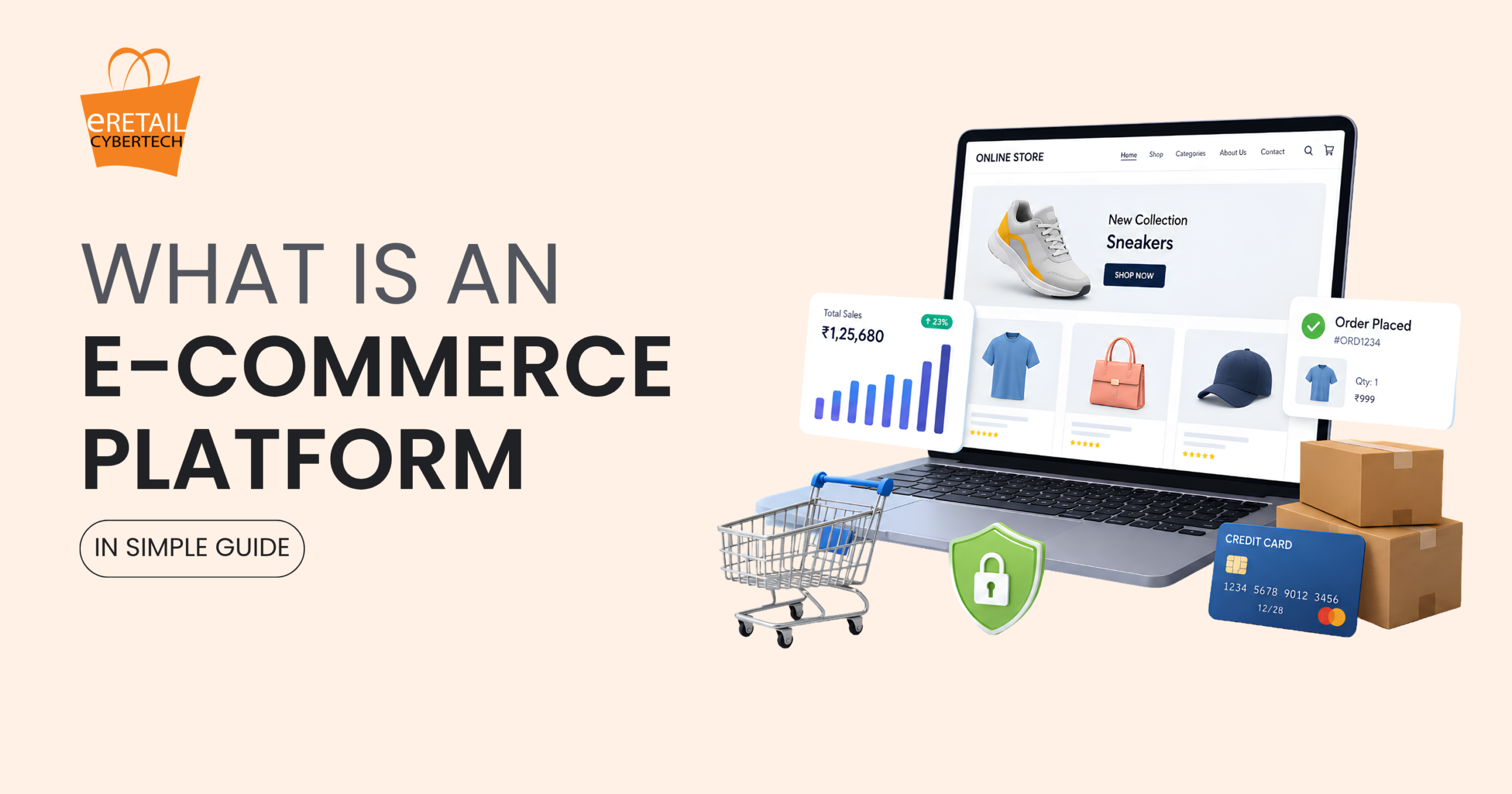

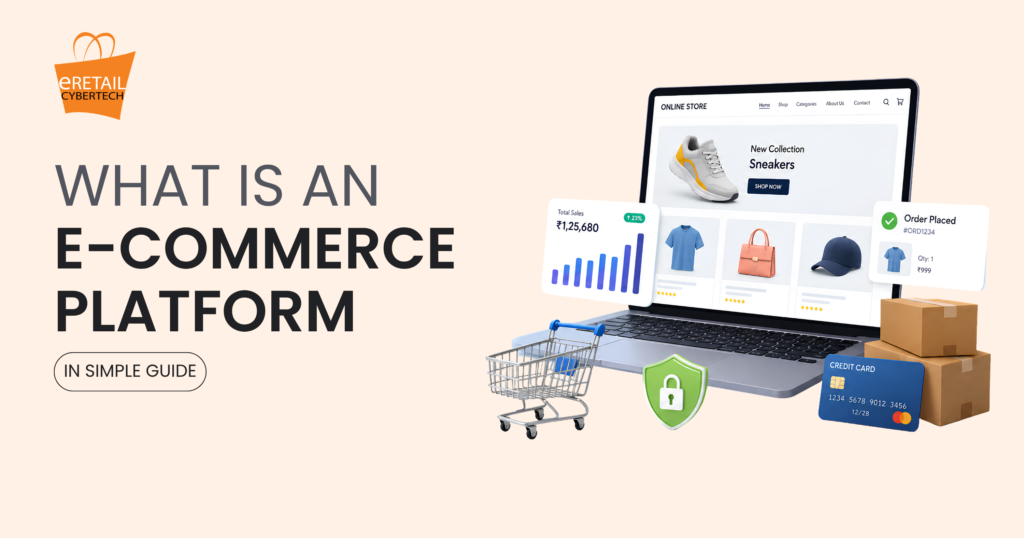
What is an Ecommerce Platform: A Complete Guide for Businesses (2026)
Introduction
Online shopping has become the preferred way for customers to purchase products across industries. Whether you’re starting a new online business or expanding an existing retail store, choosing the right ecommerce platform for business is one of the most important decisions you’ll make.
An ecommerce platform is more than just a website builder. Also, it provides the tools needed to manage products, process payments, track inventory, handle customer orders, automate marketing, and grow your business from one place.
In this complete 2026 guide, you’ll learn what an ecommerce platform is, how it works, its benefits, key features, different types, and how to choose the right solution for your business.
Table of Content:
1. What is an Ecommerce Platform?
2. Why Do Businesses Need an Ecommerce Platform?
3. How Does an Ecommerce Platform Work?
4. Types of Ecommerce Platforms?
5. Essential Features of Ecommerce platform?
6. Benefits of using an ecommerce platform?
7. Who should use an ecommerce platform?
8. How to choose the right ecommerce platform?
9. common mistakes Businesses should Avoid?
10. Ecommerce Trends businesses should watch in 2026?
11. FAQs
12. Final thoughts
What is an Ecommerce Platform?
An ecommerce platform is a digital solution that allows businesses to sell products or services online through a website, mobile app, or multiple online sales channels.
Instead of managing inventory, orders, payments, customers, and marketing separately, an ecommerce platform brings everything together in one dashboard.
Modern ecommerce platforms also integrate with payment gateways, shipping providers, CRM software, ERP systems, marketplaces, social commerce channels, and POS systems to streamline business operations.
Whether you sell 50 products or 50,000 products, an ecommerce platform helps automate repetitive tasks and improve the customer shopping experience.
Why Do Businesses Need an Ecommerce Platform?
Today’s customers expect businesses to offer convenient online shopping experiences. An ecommerce platform helps businesses meet these expectations while improving operational efficiency.
Key reasons businesses invest in ecommerce platforms include:
- Sell products 24/7 without geographical limitations
- Reach customers across cities and countries
- Automate inventory and order management
- Accept secure online payments
- Reduce manual work
- Improve customer experience
- Increase sales through digital marketing integrations
- Scale business operations more efficiently
How Does an Ecommerce Platform Work?
A typical ecommerce platform manages every stage of the online shopping journey.
Product Management
Upload products with images, pricing, categories, stock levels, and descriptions.
Customer Browsing
Customers search products, compare options, and add items to their shopping cart.
Secure Checkout
Customers complete purchases using payment methods such as credit cards, UPI, wallets, net banking, or Buy Now Pay Later (BNPL).
Order Processing
The platform automatically creates the order, updates inventory, and notifies both the customer and business.
Shipping & Delivery
Shipping partners receive fulfillment requests, generate shipping labels, and provide real-time tracking.
Analytics
Business owners monitor sales, customer behavior, conversions, inventory, and revenue using dashboards and reports.
Types of Ecommerce Platforms
SaaS Ecommerce Platform
Cloud-based software managed by the provider.
Best for:
- Startups
- SMEs
- Growing brands
Advantages
- Easy setup
- Automatic updates
- High security
- Low maintenance
Open-Source Ecommerce Platform
Provides complete control over customization.
Best for:
- Developers
- Large enterprises
- Businesses with unique requirements
Advantages
- Flexible
- Fully customizable
- No vendor lock-in
Headless Ecommerce Platform
Separates the frontend from the backend, allowing businesses to deliver personalized shopping experiences across websites, apps, kiosks, and other digital touchpoints.
Best for:
- Enterprise businesses
- Omnichannel brands
Essential Features Every Ecommerce Platform Should Have
Choose an ecommerce platform with features such as:
- Mobile-responsive storefront
- Product catalog management
- Inventory tracking
- Multi-payment gateway support
- Secure checkout
- Order management
- Customer accounts
- SEO tools
- Marketing automation
- Coupon and discount management
- Shipping integration
- Analytics dashboard
- Multi-language support
- Multi-currency support
- API integrations
- POS integration
- AI-powered product recommendations
- Customer reviews and ratings
Benefits of Using an Ecommerce Platform
A modern ecommerce platform delivers measurable business advantages:
Faster Business Growth
Expand your customer reach beyond physical store locations.
Better Customer Experience
Provide a smooth shopping journey with personalized recommendations and faster checkout.
Improved Inventory Accuracy
Track stock levels in real time to avoid overselling or stock shortages.
Higher Operational Efficiency
Automate repetitive tasks such as order processing, invoicing, shipping updates, and inventory synchronization.
Better Marketing Performance
Integrate with email marketing, social media, search advertising, and loyalty programs.
Business Insights
Access dashboards to monitor sales trends, customer behavior, and business performance.
Who Should Use an Ecommerce Platform?
An ecommerce platform is suitable for:
- Retail businesses
- Fashion brands
- Grocery stores
- Electronics sellers
- Furniture businesses
- Beauty brands
- Pharmaceutical retailers
- Manufacturers
- Wholesalers
- B2B businesses
- D2C brands
- Subscription businesses
How to Choose the Right Ecommerce Platform
Before selecting a platform, evaluate these factors:
- Ease of use
- Scalability
- Security and compliance
- Mobile optimization
- SEO capabilities
- Customization options
- Integration with existing systems
- Total cost of ownership
- Customer support
- Performance and uptime
Ecommerce Platform vs Marketplace
| Ecommerce Platform | Marketplace |
|---|---|
| Own your website | Sell on a third-party marketplace |
| Full control over branding | Limited branding options |
| Own customer data | Marketplace owns most customer interactions |
| Set your own policies | Follow marketplace rules |
| Long-term business asset | Dependent on marketplace algorithms |
Common Mistakes Businesses Should Avoid
- Choosing a platform based only on price
- Ignoring mobile optimization
- Overlooking SEO capabilities
- Using slow-loading themes
- Not planning for future scalability
- Neglecting security updates
- Skipping analytics setup
- Failing to integrate inventory management
Ecommerce Trends Businesses Should Watch in 2026
Businesses are increasingly adopting:
- AI-powered product recommendations
- Conversational commerce
- Voice search optimization
- Headless commerce
- Omnichannel selling
- Social commerce
- One-click checkout
- Hyper-personalization
- Predictive inventory management
- Sustainable ecommerce practices
Real Business Example
A regional retail business with both physical stores and an online shop implemented an ecommerce platform integrated with inventory, payment gateways, and order management. Within six months, the business reduced manual order processing time, improved inventory accuracy, and expanded its customer base beyond local markets through search and social commerce.
Frequently Asked Questions
What is an ecommerce platform in simple words?
An ecommerce platform is software that helps businesses create an online store, sell products, accept payments, manage inventory, and process customer orders from a single dashboard.
Which businesses need an ecommerce platform?
Retail stores, wholesalers, manufacturers, D2C brands, grocery businesses, fashion retailers, electronics sellers, pharmacies, and service-based businesses can all benefit from an ecommerce platform.
What features should an ecommerce platform include?
Key features include product management, secure payments, inventory tracking, order management, SEO tools, analytics, mobile responsiveness, shipping integrations, and customer relationship management.
Is an ecommerce platform different from a marketplace?
Yes. An ecommerce platform lets you build and control your own online store, while a marketplace is a third-party website where multiple sellers list products under the marketplace’s rules.
Can small businesses use an ecommerce platform?
Absolutely. Many ecommerce platforms are designed for startups and small businesses, offering affordable plans, easy setup, and scalable features that grow with the business.
Final Thoughts
A best ecommerce platform for business is the foundation of a successful online business growth. Beyond creating a digital storefront, it helps streamline operations, improve customer experiences, and support long-term growth. By selecting a platform with the right features, integrations, and scalability, businesses can adapt to changing customer expectations and stay competitive in the evolving digital commerce landscape.